The Rabbit-Birth Hoax of 1726: Mary Toft, Rabbits and Human Belief
In 1726, Mary Toft, a poor woman from Godalming in Surrey, became the centre of one of Georgian England’s strangest medical scandals.
She claimed she was giving birth to rabbits. More accurately, dead rabbits and rabbit parts were said to be appearing from her body. Biologically impossible, deeply grim, and just the sort of story Georgian pamphlet writers were never going to leave alone.
Watch the Animals in History episode
I cover the full tale in my Animals in History episode below.
Mary’s case began after she was reported to have miscarried. Soon after, local surgeon John Howard became involved. He recorded that Mary produced, among other things, a rabbit’s head, the legs of a cat, and, in a single day, nine dead baby rabbits. The story travelled beyond Surrey, drawing in royal surgeon-anatomist Nathanael St André and other medical men with reputations to protect.
What interests me as a Clinical Animal Behaviourist is how quickly the rabbits stopped being seen as animals. In this case, they became evidence, spectacle and medical theatre.
Why did people believe Mary Toft?
There is a human behaviour thread here too. People are more likely to consider a strange claim when someone with status appears to take it seriously. Today, we might call that authority bias, social proof and confirmation bias. In 1726, it helped a biologically impossible claim move from a poor woman’s home in Surrey to the attention of the royal household.
One belief gave the story somewhere to land: maternal impression, the idea that a pregnant woman’s thoughts, cravings or experiences could physically shape the developing baby. St André suggested Mary’s interest in rabbits had somehow manifested in her body.
Convenient? Yes. Correct? Absolutely not.
The animal science behind the hoax
The animal science was straightforward in this case because humans cannot gestate rabbits! Rabbits are placental mammals with their own reproductive anatomy, gestation and development. Cyriacus Ahlers reportedly examined some of the rabbit remains and found evidence suggesting the rabbits had eaten. That meant they had lived outside Mary’s body. So, the biology gave the game away.
Clearly it is also important to acknowledge the poor rabbits involved in this tale. They were bought, handled, killed and used as grim evidence in a human drama involving poverty, medicine, status and belief. They also made symbolic sense because rabbits were familiar, fast-breeding animals, tied to fertility and rural life. They could be trapped, sold and used up. The hoax depended on animals whose lives were treated as expendable.
Mary eventually confessed that the rabbit births had been staged. Why she did it is harder to pin down. Money may have played a part, along with attention, desperation, pressure from others, or the strange status that can come with being treated as a medical curiosity. She was poor, had reportedly experienced pregnancy loss, and lived in a world where women’s bodies could be examined, judged and publicly discussed by men with far greater power.
So yes, the rabbit-birth case was a hoax. It was also a story about class, gender, medicine, animal bodies and human belief. It shows how quickly humans can turn animals into symbols, and how easily the animals themselves get lost in the performance.
Almost 300 years later, the rabbit-birth hoax still tells us something about people: we humans love a bit of scandal, are drawn to strange bodies and a whiff of the impossible, and still find it very hard to look away.
For more strange-but-true stories where animals, humans and history collide, watch my Animals in History playlist here:
References and further reading
- Harvey, K. (2015). What Mary Toft Felt: Women’s Voices, Pain, Power and the Body. History Workshop Journal, 80(1), 33–51.
- Royal College of Surgeons of England. (2018). A hare-raising tale.
- University of Glasgow Library Special Collections. (2009). The curious case of Mary Toft.
- UCL Museums and Collections Blog. (2017). The Woman Who Gave Birth to Rabbits.
Learn more about our classes
Get Hanne's book, clothing and more
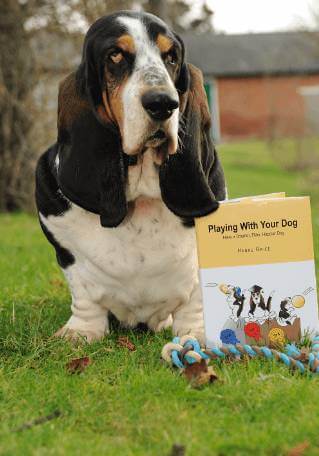
Hanne has a number of publications including her book Playing With Your Dog to help owners work out the games that are best suited for their pet to play throughout his life, from puppyhood to old age, available from Amazon. Check out Hanne's range of contemporary casuals The Collection – for pet lovers made from recyclable, organic materials that are sustainably sourced.