Dog psychology was the focus of my recent conversation with Paul Davies MBPsS FRSA on Everything’s Psychology, alongside Professor Daniel Mills, Professor of Veterinary Behavioural Medicine at the University of Lincoln.
As a Clinical Animal Behaviourist and trainer, I joined the episode to discuss what dog behaviour, training and the human-animal relationship look like in real homes: the puppy who cannot settle, the dog who reads every shift in their owner’s body language, the child-dog relationship that needs careful guidance, and the owner who loves their dog deeply but feels overwhelmed by behaviour problems.
Paul introduced the episode as the podcast’s “most requested topic” after his earlier episode on cats, before asking what is really happening behind dogs’ familiar expressions and behaviours. What is really going on behind those soft eyes, wagging tails and perfectly timed glances towards the treat drawer?

Watch on YouTube: https://youtu.be/JUlsC50wmOk
Listen on Spotify: https://open.spotify.com/episode/2O7fUSSNkPkT1QMCRnAASJ?si=eae1116ee3b44f12
From dogs and cats to the human-animal bond
The episode began with why dogs and humans formed such a powerful relationship. Daniel spoke about early domestication and the likely role of opportunity, food and mutual benefit in how dogs first came to live alongside people.
Paul also asked whether our relationship with cats is different. My answer was yes, but not because cats love us less. Dogs and cats have different evolutionary histories and communication styles. Cats can be quieter in how they communicate, using rubbing, proximity and more subtle social signals, but research has shown they can form secure and insecure attachment-type patterns with their caregivers.
The cat-human bond is not lesser. It is different. With cats, the onus is often on us to become better observers.
Dog psychology: why dogs are close observers of humans
Dogs are not little mind-readers, and they are not small humans in fur coats. Yet through domestication, selection and individual learning, they have become very good at using human information.
They watch our body orientation, gestures, facial expressions, tone of voice, movement, routines and emotional shifts. In the episode, I also spoke about research using human stress scent in cognitive bias tasks, where dogs exposed to stress odour were less likely to investigate an uncertain food location, suggesting a more cautious or pessimistic response.
That is why dog training is never only about the verbal cue. Your dog is also reading your hands, shoulders, pace, lead tension, breathing and what usually happens next.
Do dogs actually love us?
Paul asked one of the internet’s favourite dog questions: does my dog actually love me, or have they simply worked out that I open the food?
My answer was, probably both.
Food counts. Dogs have bodies, appetites and learning histories. But the human-dog relationship is not reducible to feeding. Dogs show attachment-type behaviours, seek proximity, respond to social interaction, and many find praise, touch and shared activity rewarding. So yes, when a dog greets their person with the full-body waggle, I am comfortable calling that love, in a dog-appropriate sense.
Although, as I admitted, my Labrador may produce a suspiciously similar full-body waggle when I open the fridge door.
Why play deserves more respect

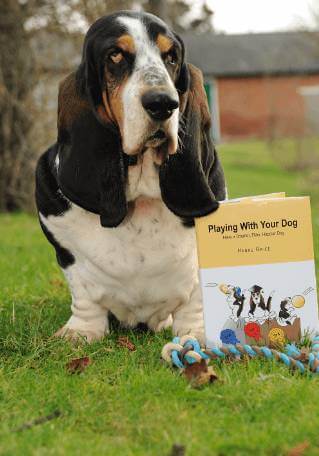
Play was another theme in the episode, and one that links closely with my book Playing With Your Dog.
Good play can support confidence, coordination, problem solving, recovery after stress and social connection. It can also help humans loosen up, become more responsive and stop turning every interaction into instruction.
A good dog-owner relationship is not only about how much time we spend together. It is also about the quality, type and frequency of interactions. Are they enjoyable for the dog? Are they predictable? Can the dog opt in, pause, recover and come back for more?
That is when play becomes useful, relationship-building work, not just “burning off energy”.
Children and dogs need thoughtful guidance
Dogs and children can have wonderful relationships, but they need adult guidance.
Children may show affection through hugging, leaning, chasing, grabbing toys, crowding into space or moving unpredictably. Many dogs tolerate more than they enjoy, until they cannot.
I also spoke about my own research into dog-owner relationships during pregnancy and after a baby arrives. Owners often do not love their dog any less, but walks, play and interaction patterns can change. The guilt can be enormous.
Preparation helps. Children and dogs both need their own safe spaces. Dogs need quality, undisturbed sleep. Children need simple rules they can remember, such as:
“Quiet and slow is the way to go.”
That is especially useful near a dog who is resting, eating or enjoying a toy.
Growling is useful information
In the quick-fire section, Paul asked which behaviour clients often panic about, but should not.
My answer was growling.
Growling tells us the dog is uncomfortable and needs something to change. If we punish the growl, we may remove the warning without changing the underlying emotion. The dog still feels worried, threatened or unsafe, but may be less likely to give that early communication.
Good behaviour work does not start with labels such as naughty, stubborn or dominant. It starts with better questions:
What is the dog trying to access, avoid or communicate?
What is being reinforced?
What emotion or welfare issue may be sitting underneath?
What can we change so the dog has a better option?
That approach is kinder, and it is also more accurate.
Listen to The Psychology of Dogs
It was a pleasure to join Paul Davies and Professor Daniel Mills for such a thoughtful conversation on dog psychology, behaviour, training and the human-animal relationship.
Watch on YouTube: https://youtu.be/JUlsC50wmOk
Listen on Spotify: https://open.spotify.com/episode/2O7fUSSNkPkT1QMCRnAASJ?si=eae1116ee3b44f12
If you need support with puppy training, dog behaviour problems, separation-related behaviour, cat behaviour, child-dog relationships or life with a new dog, you can find out more about my training and behaviour services at www.hannegrice.com.
Learn more about our classes
Get Hanne's book, clothing and more
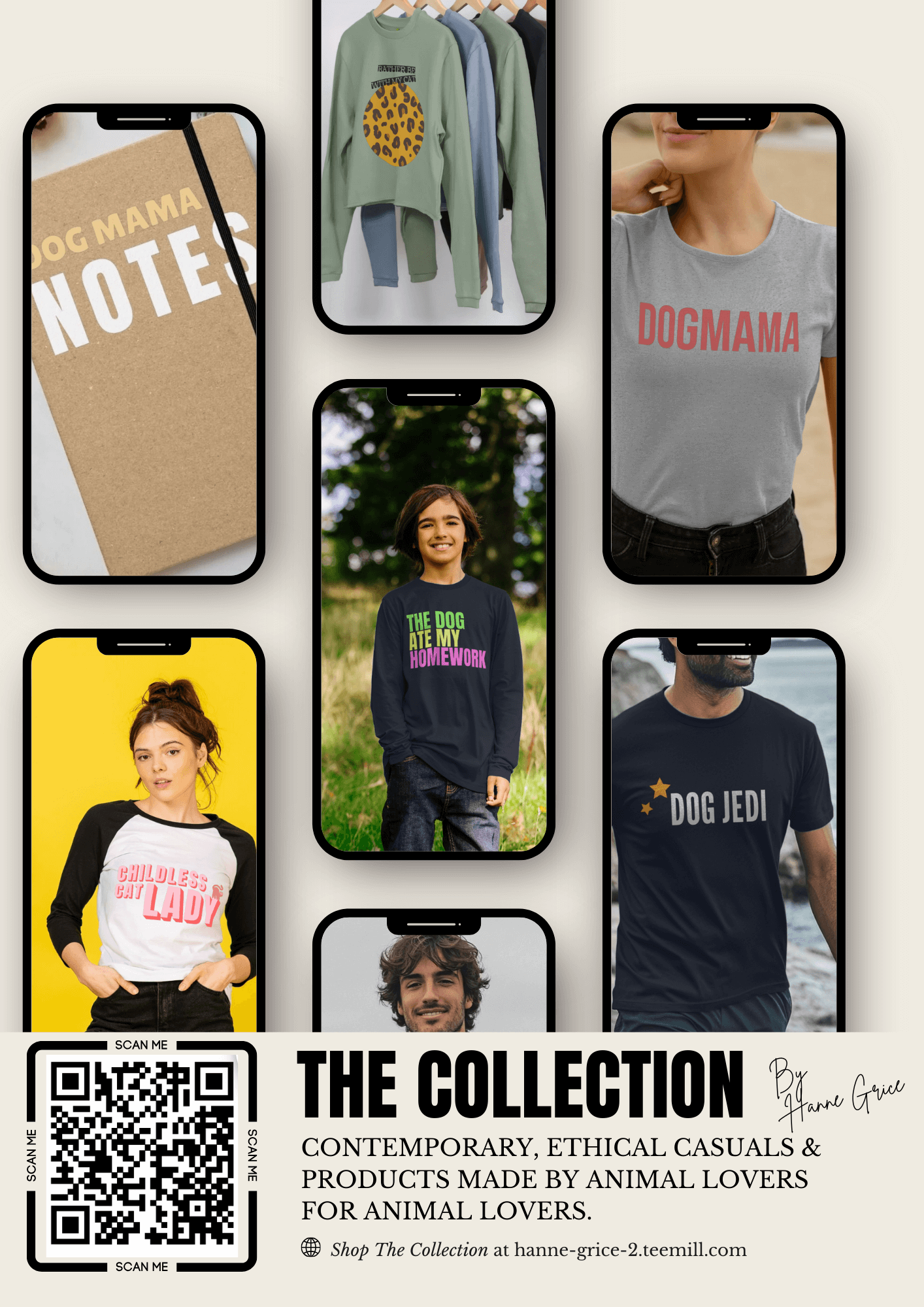
Hanne has a number of publications including her book Playing With Your Dog to help owners work out the games that are best suited for their pet to play throughout his life, from puppyhood to old age, available from Amazon. Check out Hanne's range of contemporary casuals The Collection – for pet lovers made from recyclable, organic materials that are sustainably sourced.