What does it really mean when we say a dog loves their person?
We often talk about dogs loving their people, yet in clinical behaviour practice the more revealing question is how relationship quality shapes behaviour over time. Love, in scientific terms, is less a feeling to measure and more a pattern of interaction that influences emotional stability, coping, and resilience.
Dogs evolved within human social groups, not simply alongside them. Selection favoured individuals able to attend to our voices, gestures, and emotional states. That history means human presence is not neutral to dogs. It becomes part of their emotional environment. Neuroscience supports this view. Imaging studies show that familiar human cues activate reward-related brain regions in dogs, indicating that trusted people acquire intrinsic emotional value rather than serving only as predictors of food or play (Berns et al., 2012; Cook et al., 2016). Reward, however, is only part of the story. While food activates the same circuitry, relationship quality depends on consistency.
Attachment research offers a useful framework. Dogs, like human infants and other social mammals, seek specific partners when uncertain, recover more efficiently from stress in their presence, and explore more freely when they feel secure. These patterns help explain why some dogs settle easily while others remain hyper-vigilant, overly dependent, or prone to rapid escalation. Often the difference lies less in temperament and more in relational history. Physiology reinforces this. Studies show synchronisation of stress hormone patterns between dogs and their guardians, demonstrating that relationships shape how bodies respond to the world (Sundman et al., 2019). From a clinical perspective, relationship quality therefore becomes part of the dog’s behavioural environment.
For guardians, this reframes the question. Instead of asking whether a dog loves you, consider whether they feel safe with you. That shift moves the focus from performance to emotional security, where lasting behaviour change actually begins.
To understand more, check out my episode, The Love Question, below, and explore the full Science of Connection playlist here.
References
- Berns, G.S., Brooks, A.M. and Spivak, M. (2012) Functional MRI in awake unrestrained dogs. PLoS ONE, 7(5), e38027. https://doi.org/10.1371/journal.pone.0038027
- Cook, P.F. et al. (2016) Awake canine fMRI predicts dogs’ preference for praise versus food. Social Cognitive and Affective Neuroscience, 11(12), pp.1853–1862. https://doi.org/10.1093/scan/nsw102
- Sundman, A.S. et al. (2019) Long-term stress levels are synchronised in dogs and their owners. Scientific Reports, 9, 7391. https://doi.org/10.1038/s41598-019-43851-x.
Learn more about our classes
Get Hanne's book, clothing and more
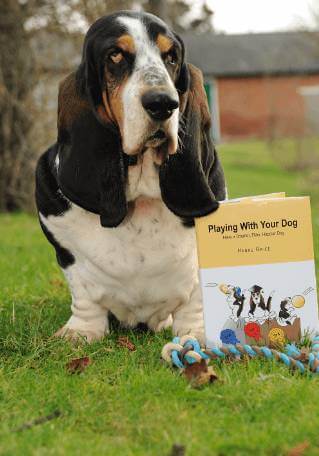
Hanne has a number of publications including her book Playing With Your Dog to help owners work out the games that are best suited for their pet to play throughout his life, from puppyhood to old age, available from Amazon. Check out Hanne's range of contemporary casuals The Collection – for pet lovers made from recyclable, organic materials that are sustainably sourced.