
Frustration sits behind many behaviour concerns seen in dogs, yet it is often mistaken for overexcitement, stubbornness, or deliberate disobedience. Yet frustration emerges when an animal is motivated to access something they value and cannot, or when an expected outcome repeatedly fails to appear.
Why Frustration Is Not Just “Overexcitement”
Dogs constantly form predictions about their environment. They learn which behaviours lead to access to food, movement, social contact, or play. When those expectations are blocked, arousal rises. This is not a failure of training; it is a predictable biological response linked to motivation and reward systems. Repeated blocked expectations can gradually lower frustration tolerance. This is why behaviours such as lead reactivity, barrier barking, pacing, and difficulty settling often develop in environments where access is inconsistent, delayed, or unclear. The dog is not choosing to escalate. They are trying to solve a problem that feels unresolved.
Common advice often focuses on suppression, distraction, or simple exposure. While these can change behaviour in the moment, they rarely address the emotional drivers underneath. If motivation remains high and access remains unpredictable, frustration will often reappear in another form. Supporting frustration tolerance is not about removing challenge. It is about creating predictable patterns where effort, waiting, and access make sense from the dog’s perspective.
Why Frustration Threshold Matters for Welfare
Dogs vary in how quickly frustration tips into loss of regulation. Genetics, early learning, health, and environment all influence where that threshold sits. When frustration repeatedly exceeds a dog’s coping capacity, we often see spill-over into behaviours humans find difficult, from vocalisation to impulsive movement or conflict behaviour. Recognising early frustration signals, such as fixation, increased muscle tension, or rapid shifts in attention, allows calm handler intervention before escalation occurs. In this way, frustration becomes information rather than simply a behaviour problem.
To understand more, check out my episode, the Frustration Threshold, below, and explore the full Science of Connection playlist here.
If you are experiencing problems with your dog, then do seek the support of a certified accredited professional via the Practitioner Directory of the Animal Behaviour & Training Council’s website.
References
- Amsel, A. (1992) Frustration Theory. Cambridge University Press.
- McPeake, K.J., Collins, L.M., Zulch, H. and Mills, D.S. (2019) The Canine Frustration Questionnaire – Development of a New Psychometric Tool for Measuring Frustration in Domestic Dogs (Canis familiaris). Frontiers in Veterinary Science, 6, 152. doi: 10.3389/fvets.2019.00152
- McPeake, K.J., Collins, L.M., Zulch, H., Mills, D.S. (2021) Behavioural and Physiological Correlates of the Canine Frustration Questionnaire. Animals, 11, 3346. https://doi.org/10.3390/ani11123346
- Panksepp, J. (2011) The basic emotional circuits of mammalian brains. Brain Research Reviews, 62, pp. 200-220. doi:10.1016/j.neubiorev.2011.08.003
Learn more about our classes
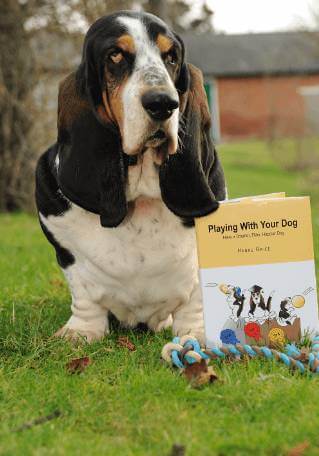
Get Hanne's book, clothing and more
Hanne has a number of publications including her book Playing With Your Dog to help owners work out the games that are best suited for their pet to play throughout his life, from puppyhood to old age, available from Amazon. Check out Hanne's range of contemporary casuals The Collection – for pet lovers made from recyclable, organic materials that are sustainably sourced.