Many people treat play as optional in a dog’s life, a bit of fun if time allows, or a way of burning off excess energy. Behavioural science suggests a more interesting picture. Play is not simply an activity. It is one of the ways mammals develop emotional regulation, social competence, and resilience.
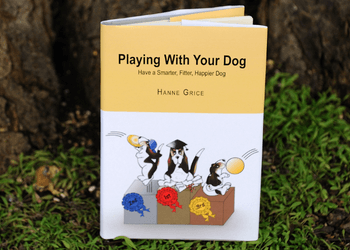
When I wrote Playing With Your Dog in 2010, the focus was on enrichment, learning, and strengthening relationships through shared activity. That foundation still holds. What has developed since then is a far clearer understanding of why play matters at a neurological and emotional level, and why its impact depends less on quantity and more on how it is experienced by the dog.
Trainers and behaviour advice often recommend more play, yet it is rarely examined with much precision. In practice, “play more” often becomes a catch-all suggestion, offered without careful thought about the type of play involved, how it affects arousal, or whether it genuinely supports regulation. This matters because play is not a neutral input. It shapes emotional state.
Much of modern dog culture frames play as either enrichment or energy expenditure. Both views are incomplete. High-arousal games are frequently promoted as bonding or confidence-building, even when they leave dogs struggling to disengage, recover, or settle afterwards. In these cases, play can amplify frustration rather than relieve it, particularly for dogs who already find emotional regulation difficult.
What Play Is Actually Doing
Behavioural science offers a more useful lens. Play operates within emotional systems that evolved to support social learning, stress recovery, and competence in changing environments. When play is mutual, flexible, and easy to pause, it supports those functions. When it is intense, one-sided, or difficult to interrupt, it can undermine them.
This distinction is often missed because human preferences drive play choices more than canine needs. Ball throwing, fast chase, or rough games can feel productive or satisfying to us, even when they push dogs into arousal states they struggle to exit, let alone the longer-term impact ball throwing and high octane games and sports can have on the dog’s musculoskeletal system. Quieter forms of play, such as searching, problem-solving, or short interactive games, are often dismissed as insufficient, despite their strong regulatory value and joint health.
Why Play Quality Matters More Than Quantity
From a welfare perspective, the quality of play matters more than the quantity. Short, well-matched games that dogs can enter and leave easily are more likely to support emotional balance than long sessions that prioritise intensity or exhaustion. Play also offers information. How a dog starts, maintains, and disengages from play can tell us a great deal about emotional security, coping strategies, and relationship dynamics.
Understanding play as part of an emotional system shifts how we use it. Instead of asking how much play a dog needs, a more useful question emerges: what does this play do to the dog’s emotional state, and what patterns is it reinforcing over time? That question sits at the heart of the play dynamic.
To understand more, check out my episode, the Play Dynamic, below, and explore the full Science of Connection playlist here.
References
- Bekoff, M. (2001) Social play behaviour: Cooperation, fairness and the evolution of morality. Journal of Consciousness Studies, 8, pp. 81-90.
- Grice, H. (2010) Playing With Your Dog. United States. Xlibris. Available via Amazon.
- Panksepp, J. (2011) The basic emotional circuits of mammalian brains. Brain Research Reviews, 62, pp. 200-220.
Learn more about our classes
Get Hanne's book, clothing and more
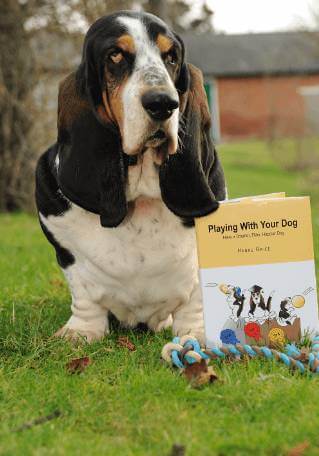
Hanne has a number of publications including her book Playing With Your Dog to help owners work out the games that are best suited for their pet to play throughout his life, from puppyhood to old age, available from Amazon. Check out Hanne's range of contemporary casuals The Collection – for pet lovers made from recyclable, organic materials that are sustainably sourced.