
Puppy training classes are widely recommended as part of responsible early dog ownership. They sit alongside vaccinations, microchipping and other early husbandry decisions intended to support a puppy’s development. In practice, however, attendance is far from universal.
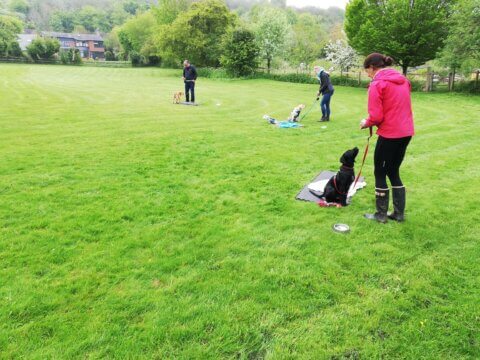
Data from the Dogs Trust Generation Pup longitudinal research project provides a useful snapshot. Analysis of responses from 2,187 puppy owners found that around 67% attended at least one puppy training class before their dog reached 19 weeks of age, meaning roughly one in three puppies had not attended a class during this early developmental stage (Buckland et al., 2025). Attendance was more common among first-time owners, higher-income households, owners who received a puppy information pack when acquiring their dog, and those who had already intended to attend. Puppies acquired at an older age were less likely to end up in a class. These findings also feature within the Dogs Trust research programme’s wider review of dog ownership trends.
Owners who had not attended were also asked why. The most common responses included preferring to train the puppy themselves, believing classes would not help, a lack of suitable classes, and a lack of time.
These responses provide useful insight into the practical realities of life with a new puppy. They also raise an important behavioural question: what shapes these decisions in the first place?
Training classes differ from many other elements of early puppy care. Veterinary appointments are scheduled through the veterinary practice, microchipping is a legal requirement, and food must be purchased because the puppy needs to eat. Training classes, by contrast, rely entirely on a guardian’s judgement that attending will be worthwhile.
Behavioural science suggests that people are most likely to follow through on an action when three elements align: capability, opportunity and motivation. These components form the basis of the COM-B behaviour change framework widely used in public health and behavioural science (Michie et al., 2011). When any one of these factors weakens, even well-intentioned plans can fade.
Confidence and the DIY trainer

The most frequently reported reason for skipping classes was a preference to train the puppy independently. In many ways, this reflects a positive shift in modern dog ownership. Guardians today have access to a vast range of learning resources, from books and podcasts to online tutorials and structured training courses. Many people bring a puppy home already motivated to teach and engage with their dog.
Psychologists often describe this sense of capability using the concept of self-efficacy, the belief that one can successfully perform a task (Bandura, 1977). High self-efficacy tends to increase persistence and engagement when people are learning new skills. Subsequent research has consistently shown that confidence in one’s ability can influence whether individuals attempt and maintain behaviours across a range of domains (Stajkovic and Luthans, 1998).
However, confidence and competence do not always develop at the same pace. Research into learning and decision-making shows that people can sometimes overestimate their abilities in unfamiliar domains, particularly when early successes appear straightforward (Kruger and Dunning, 1999).
Dog training is especially susceptible to this pattern. In clinical practice, it is common to see owners arrive for behavioural support once these early successes begin to unravel in more complex real-world environments. Many behaviours can be taught relatively easily within the calm environment of the home. A puppy sits for food, follows a lure, or participates enthusiastically in short training games. These early successes are genuine progress, yet they do not always prepare owners for the more complex challenges that arise later, such as recall in distracting environments, lead walking in busy places, or the behavioural shifts associated with adolescence.
Navigating online advice
The modern information environment also adds another layer of complexity. A large proportion of dog training advice now circulates through social media platforms and short-form online content. Some of this material is excellent and grounded in contemporary behavioural science. However, the overall quality of advice varies considerably. Alongside thoughtful guidance sit outdated ideas, simplified “quick fixes”, and methods that do not reflect current understanding of animal learning or welfare.
For guardians attempting to train their puppy independently, distinguishing between these sources can be challenging and visibility online does not necessarily indicate expertise.

Professional standards, therefore, play an important role in helping owners navigate this landscape. Trainers and behaviourists registered with organisations recognised by the Animal Behaviour and Training Council (ABTC) must meet defined standards of education, ethical practice and professional accountability. For owners who wish to take an active role in training their puppy themselves, consulting practitioners within these recognised frameworks can help ensure that the advice they rely on is science-led, humane and consistent with current best practice.
For those who prefer structured guidance they can follow at home, I have also developed an online Puppy Package that supports guardians through the early stages of puppy development. The programme covers common puppy problems, key life skills and practical training exercises designed to build calm, confident behaviour.
Research comparing training approaches has shown that reward-based methods are associated with more favourable behavioural and welfare outcomes than those relying on aversive techniques (Hiby et al., 2004; Ziv, 2017).
When time becomes the barrier
Owners in the Generation Pup study also reported that time constraints prevented them from attending classes (Buckland et al., 2025). Anyone who has lived with a young puppy will recognise the early weeks as a period of adjustment. Sleep disruption, toilet training and the general reshaping of household routines can make daily life feel unpredictable.
Research on decision-making under pressure shows that when people face multiple competing demands, attention tends to narrow toward the most immediate problems rather than activities with longer-term benefits. Mani et al. (2013) describe this as a reduction in available cognitive bandwidth.
For many new puppy guardians, the urgent concerns are the ones unfolding that day: biting, barking or another puddle on the kitchen floor. Faced with these immediate pressures, attending a training class the following week can easily slip down the list of priorities. Yet these classes often introduce practical strategies that help address exactly these challenges.
The question of access and trust
Some owners reported that suitable classes were simply not available to them (Buckland et al., 2025). In some cases, this reflects genuine access barriers. Training provision varies across the country, particularly in rural areas, and class times may clash with work schedules or family commitments.
Economic pressures may also influence decision-making, although this was not specifically reported by owners within the Generation Pup responses. During periods of rising household costs, discretionary spending on services such as training classes can become more difficult for some households to prioritise. While the current dataset does not identify cost as a primary reason for non-attendance, the wider economic context can still shape the practical choices owners feel able to make.
Trust also plays a role. The label “puppy class” covers a wide spectrum of approaches. Some puppy programmes are carefully structured and welfare-focused. Others may allow chaotic interactions that can overwhelm young puppies. Owners often rely on websites, reviews or brief online clips to judge whether a class environment feels appropriate. When those signals feel uncertain, choosing not to attend may appear to be the safer option.
The influence of early guidance
One of the most practically useful findings in the Dogs Trust research concerns the moment when a puppy first arrives home.
Owners who received information about training classes when acquiring their puppy were significantly more likely to attend one (Buckland et al., 2025). Behavioural science suggests that early prompts can strongly influence whether intentions translate into action. Research on implementation intentions shows that people are more likely to carry out behaviours when they form clear plans about when and how an activity will take place (Gollwitzer, 1999; Sheeran et al., 2005). Introducing training classes as part of the early preparation for a puppy therefore increases the likelihood that attendance becomes part of the routine.
Looking at the question differently
Taken together, the Dogs Trust findings suggest that attendance at puppy classes is shaped by a combination of confidence, opportunity, time pressures and early guidance. When those factors align, classes become a natural step in raising a dog. When they do not, even motivated owners may find themselves navigating the early months without structured support.
Puppies, of course, continue learning regardless. Every interaction, every walk and every experience contributes to how they respond to the world around them. The real question is not whether puppies learn, it is whether the people raising them have the support they need to guide that learning well.
References
- Bandura, A. (1977) ‘Self-efficacy: Toward a unifying theory of behavioral change’, Psychological Review, 84(2), pp. 191-215. Available at: https://doi.org/10.1037/0033-295X.84.2.191
- Buckland, E. L., Kinsman, R. H., Fitts, J., Casey, R. A., Murray, J. K. and colleagues (2025) ‘Factors associated with puppy training class attendance’, Animals, 15(17), 2582. Available at: https://www.mdpi.com/2076-2615/15/17/2582
- Gollwitzer, P. M. (1999) ‘Implementation intentions: Strong effects of simple plans’, American Psychologist, 54(7), pp. 493-503. Available at: https://doi.org/10.1037/0003-066X.54.7.493
- Hiby, E. F., Rooney, N. J. and Bradshaw, J. W. S. (2004) ‘Dog training methods: Their use, effectiveness and interaction with behaviour and welfare’, Animal Welfare, 13(1), pp. 63-69. Available at: https://doi.org/10.1017/S0962728600026683
- Kruger, J. and Dunning, D. (1999) ‘Unskilled and unaware of it: How difficulties in recognizing one’s own incompetence lead to inflated self-assessments’, Journal of Personality and Social Psychology, 77(6), pp. 1121-1134. Available at: https://doi.org/10.1037/0022-3514.77.6.1121
- Mani, A., Mullainathan, S., Shafir, E. and Zhao, J. (2013) ‘Poverty impedes cognitive function’, Science, 341(6149), pp. 976-980. Available at: https://doi.org/10.1126/science.1238041
- Michie, S., van Stralen, M. M. and West, R. (2011) ‘The behaviour change wheel: A new method for characterising and designing behaviour change interventions’, Implementation Science, 6, 42. Available at: https://doi.org/10.1186/1748-5908-6-42
- Sheeran, P., Webb, T. L. and Gollwitzer, P. M. (2005) ‘The interplay between goal intentions and implementation intentions’, Personality and Social Psychology Bulletin, 31(1), pp.87-98. Available at: https://doi.org/10.1177/0146167216636638
- Stajkovic, A.D. and Luthans, F. (1998) ‘Self-efficacy and work-related performance: A meta-analysis’, Psychological Bulletin, 124(2), pp. 240–261. Available at: https://doi.org/10.1037/0033-2909.124.2.240
- Ziv, G. (2017) ‘The effects of using aversive training methods in dogs: A review’, Journal of Veterinary Behavior, 19, pp. 50-60. Available at: https://doi.org/10.1016/j.jveb.2017.02.004
Learn more about our classes

Get Hanne's book, clothing and more
Hanne has a number of publications including her book Playing With Your Dog to help owners work out the games that are best suited for their pet to play throughout his life, from puppyhood to old age, available from Amazon. Check out Hanne's range of contemporary casuals The Collection – for pet lovers made from recyclable, organic materials that are sustainably sourced.