The term “fear period” is used a lot in puppy advice, giving a sense that young dogs move through development according to a fixed calendar. However, it is much more nuanced than this.
Early canine social development is better understood as a series of sensitive windows, where early rearing, social experience and environment influence how a young dog learns about their world (Freedman et al., 1961; Howell et al., 2015; McEvoy et al., 2022).
What the research says
A classic paper in this area by Freedman et al. (1961) found that puppies became more cautious around unfamiliar people from around five weeks of age. Puppies who had appropriate social contact with people before 14 weeks were better placed to develop normal social responses to humans later on. Although it is an old study and small by modern standards, it helped form the basis of what we now call the puppy socialisation period.

More recent research by Morrow et al. (2015) found breed-related differences in the onset of fear-related avoidance in puppies aged between 4 and 10 weeks. This makes a single universal “fear imprint period” difficult to defend. Reviews and experimental work commonly place the main canine socialisation period at around three to 12 weeks (Howell et al., 2015; Stolzlechner et al., 2022). Work from McEvoy et al. (2022) adds a note of caution too, as there are fewer high-quality studies on puppy socialisation than many popular advice pieces suggest, and the studies themselves vary in design. In practice, the socialisation and fear period discussion often extends into later puppyhood because the shift from early socialisation into juvenile development is gradual.
That does not mean we should throw out the term “fear period” altogether. As shorthand, it can certainly help owners notice that their puppy or adolescent dog may suddenly become more cautious, easily startled, or reluctant to engage. The difficulty arises when the phrase is treated as a rigid biological time marker, or when owners are told to expose puppies to as much as possible before the clock runs out.
What this means for owners
Just like us, dogs’ brains are plastic, not in the literal sense (!), but in the sense that learning never stops. However, there is no getting away from the fact that early experience still carries disproportionate influence. This is why socialisation needs to be gradual, systematic, positive and careful, rather than a matter of volume. A puppy who is flooded with traffic, dogs, children, handling and noise in quick succession may learn that the world is overwhelming rather than safe. A dog who is given distance, gentler versions of new experiences, careful pairing with positive outcomes such as food and fun, good sleep, choice and recovery time has a much better chance of learning that the world is manageable.
You may have seen recent headlines about human neuroscience research from Mousley et al. (2025), which found that human brain network development moves through broad phases, with adolescence-like neural architecture extending into the early thirties. It offers a useful parallel when we think about developmental timelines in dogs. We need to be careful here, because dogs are not small humans and their developmental timeline is vastly compressed. Still, research like this reminds us that development is dynamic, staged, and very much still being researched.
So, rather than thinking puppies experience a fear period within a rigid time frame, leading owners to race through as many situations and interactions as possible, think about what your dog needs from you today. Supporting your dog through key stages of development means helping them feel safe enough to learn, at the age and pace they can manage.
If you would like help supporting your puppy through socialisation and early training, see my puppy training classes.
References
- Freedman, D.G., King, J.A. and Elliot, O. (1961) ‘Critical period in the social development of dogs’, Science, 133(3457), pp. 1016–1017. https://doi.org/10.1126/science.133.3457.1016
- Howell, T.J., King, T. and Bennett, P.C. (2015) ‘Puppy parties and beyond: the role of early age socialization practices on adult dog behavior’, Veterinary Medicine: Research and Reports, 6, pp. 143–153. https://doi.org/10.1126/science.133.3457.1016
- McEvoy, V., Espinosa, U.B., Crump, A. and Arnott, G. (2022) ‘Canine socialisation: a narrative systematic review’, Animals, 12(21), 2895. https://doi.org/10.3390/ani12212895
- Morrow, M., Ottobre, J., Ottobre, A.C., Neville, P., St-Pierre, N.R., Dreschel, N.A. and Pate, J.L. (2015) ‘Breed-dependent differences in the onset of fear-related avoidance behavior in puppies’, Journal of Veterinary Behavior, 10(4), pp. 286–294. https://doi.org/10.1016/j.jveb.2015.03.002
- Mousley, A. et al. (2025) ‘Topological turning points across the human lifespan’, Nature Communications, 16, 10875. https://doi.org/10.1038/s41467-025-65974-8
- Stolzlechner, L. et al. (2022) ‘Optimising puppy socialisation: short- and long-term effects of a training programme during the early socialisation period’, Animals, 12(22), 3067. https://doi.org/10.3390/ani12223067
Learn more about our classes
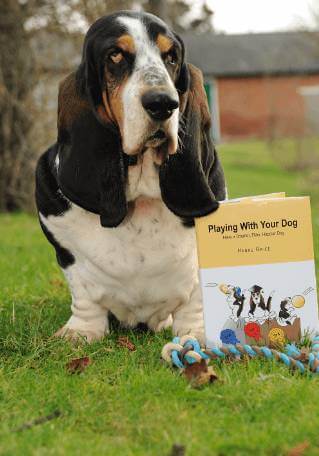
Get Hanne's book, clothing and more
Hanne has a number of publications including her book Playing With Your Dog to help owners work out the games that are best suited for their pet to play throughout his life, from puppyhood to old age, available from Amazon. Check out Hanne's range of contemporary casuals The Collection – for pet lovers made from recyclable, organic materials that are sustainably sourced.